


Family-owned · Since 2000
We Keep Your PoolOut of Trouble
Premium Weekly Pool Service for Steiner Ranch, Lakeway, Cedar Park & West Austin Homeowners.
★★★★★4.947 Google reviews- No contracts
- Chemicals included
- Flat monthly rate
- Satisfaction guaranteed
Get a Free Estimate
A few quick details. We reply the same day.
Start with what you see
What does your pool need?
Find the right service, learn what to check, and know what to tell us when you call.
Green or cloudy water
Algae, changing water color, or a pool that will not stay clear.
Find your next stepPool losing water
A falling waterline, repeated top-ups, or a visible equipment leak.
Find your next stepPump not priming or running
Air in the basket, unusual noise, an error message, or weak circulation.
Find your next stepFilter pressure or flow changes
Pressure rising from its clean baseline, debris returning, or weak jets.
Find your next stepKeeping up with pool maintenance
A weekly routine, water testing, debris removal, and equipment checks.
Find your next stepBuying a home with a pool
Understand the pool and equipment before planning repairs or maintenance.
Find your next stepComparing options? Explore Austin pool service costs or find your service area.
Every visit.
Every detail.
Professional weekly pool service for Steiner Ranch, Lakeway, Cedar Park and West Austin homeowners. No contracts, flat monthly rate, all chemicals included.
Or, as we like to call it — the Grime Scene Unit.

- 01Surface skimming & debris removal
- 02Wall and floor brushing
- 03Vacuuming
- 04Tile line cleaning
- 05Chemical testing & balancing
- 06Basket & filter check
- 07Equipment inspection
Beyond the weekly visit. Regular filter inspection and deep cleaning to keep your water flowing clean and your system running efficiently.
Other ways we keep
your pool out of trouble.
Rather do it yourself?
Save time, money, and guesswork with eight guides covering weekly maintenance, Central Texas chemistry, seasonal care, and when to call a pro.
Open Pool SchoolVacation ServiceGoing out of town?
We keep your pool in perfect shape while you’re away — so you come home to clear water and balanced chemistry.
Vacation & Airbnb serviceEquipment MaintenancePump tune-ups & more.
Pump tune-ups, salt cell cleaning, O-ring replacement, timer adjustments — preventive maintenance that extends equipment life.
Equipment repair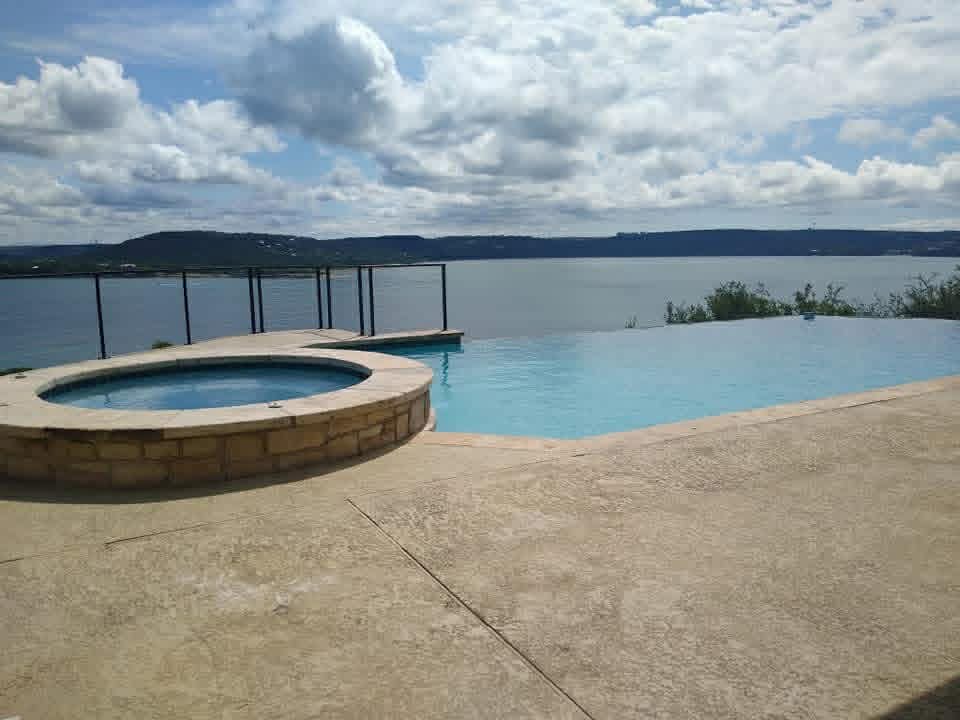
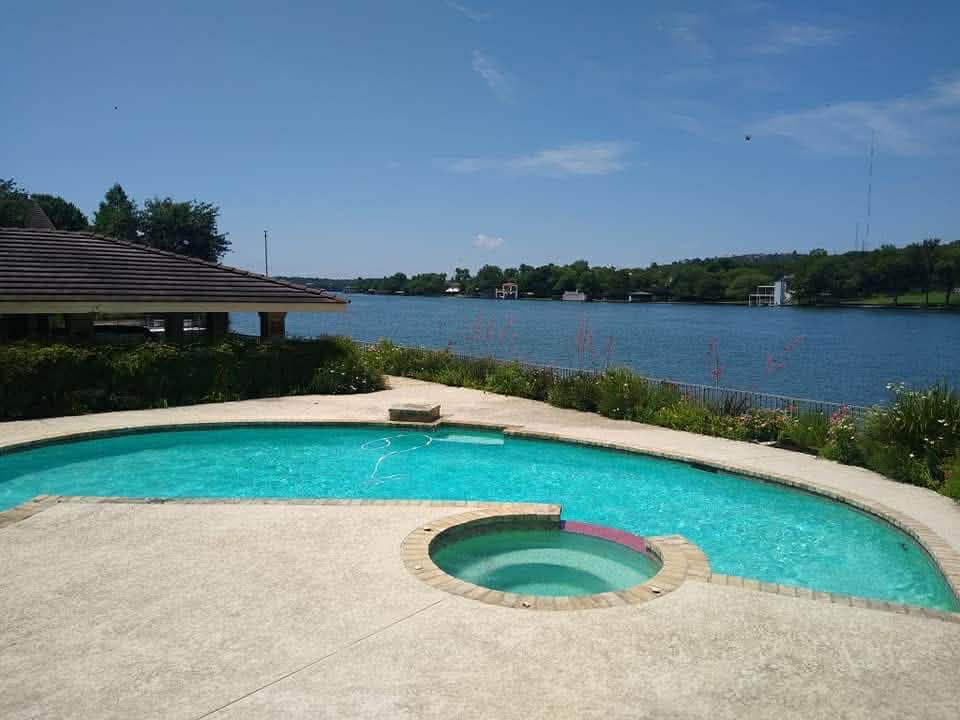
An infinity edge over Lake Travis. The water reads sharp because the chemistry is right — not because the photo's a stock shot.
Special Ops
Pool equipment repair, leak detection, and pool inspections for Steiner Ranch, Lakeway, and West Austin homes. From pump repair to full diagnostics, we've seen it all in 25+ years of Austin pool service.
Repairs
Pumps, motors, heaters, automation — we diagnose and fix equipment issues to get your pool back on track.
Inspections
Comprehensive pool and equipment inspections. Buying a home? We'll tell you exactly what you're getting.
Leak Detection
Losing water? We pinpoint leaks in plumbing, shells, and fittings so you stop wasting water and money.
Diagnostics
Full system diagnostics to identify problems before they become expensive emergencies.
Real pools. Real Austin homes.
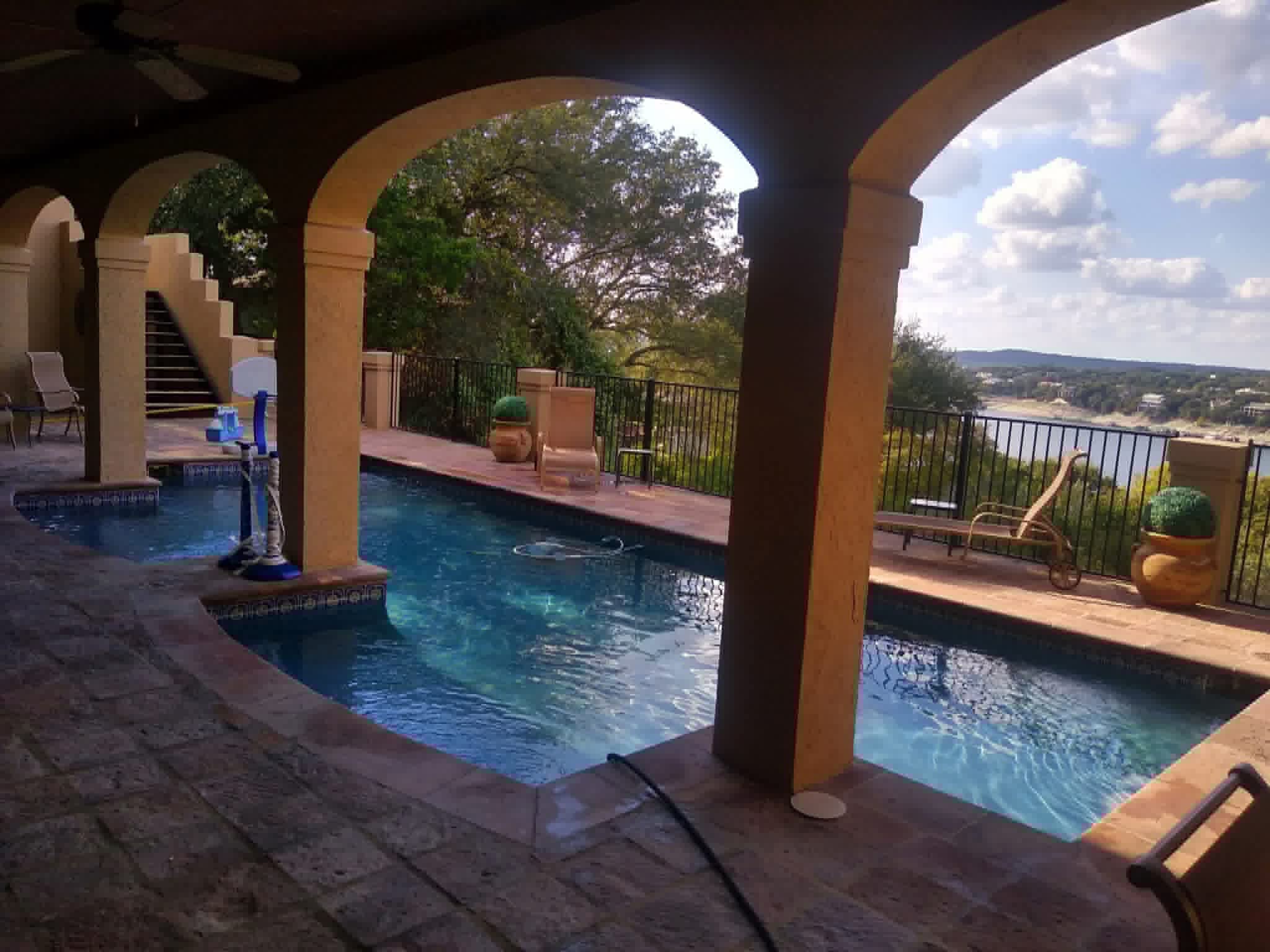
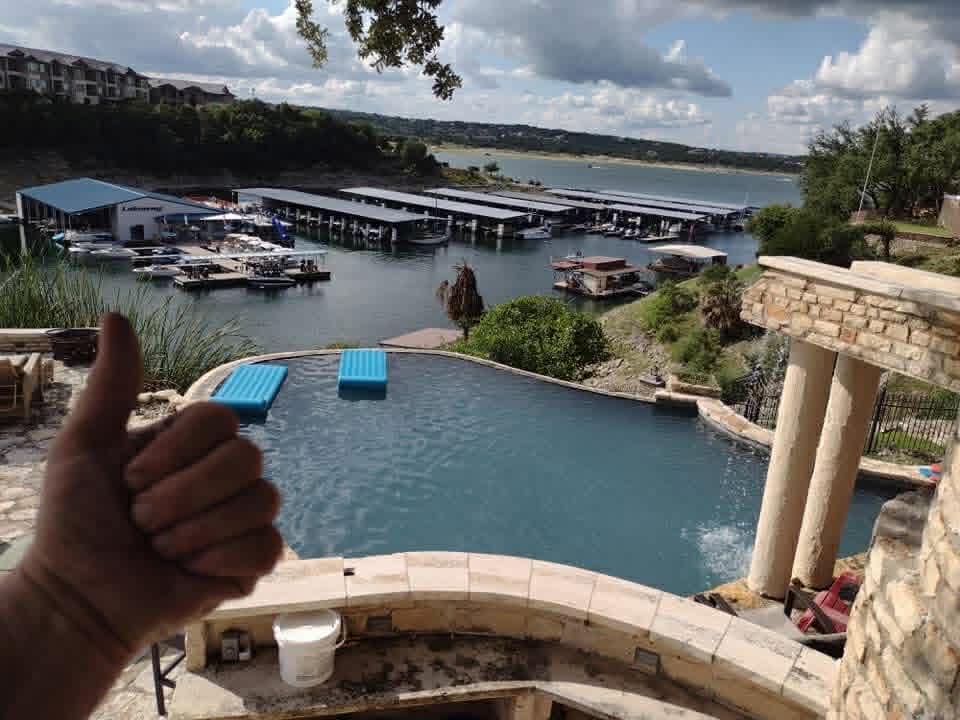
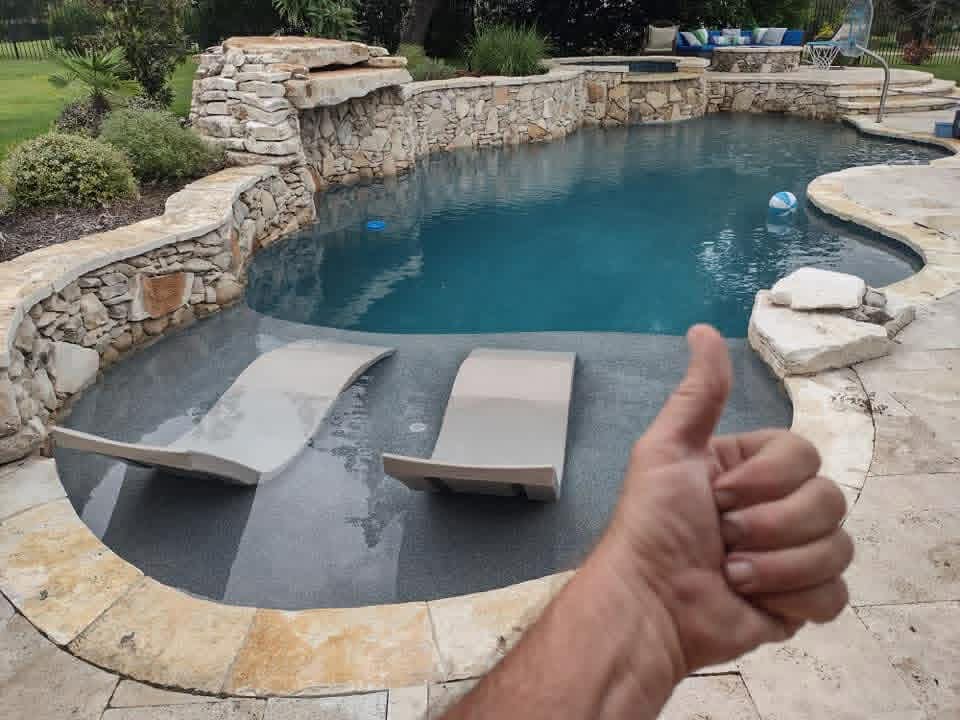
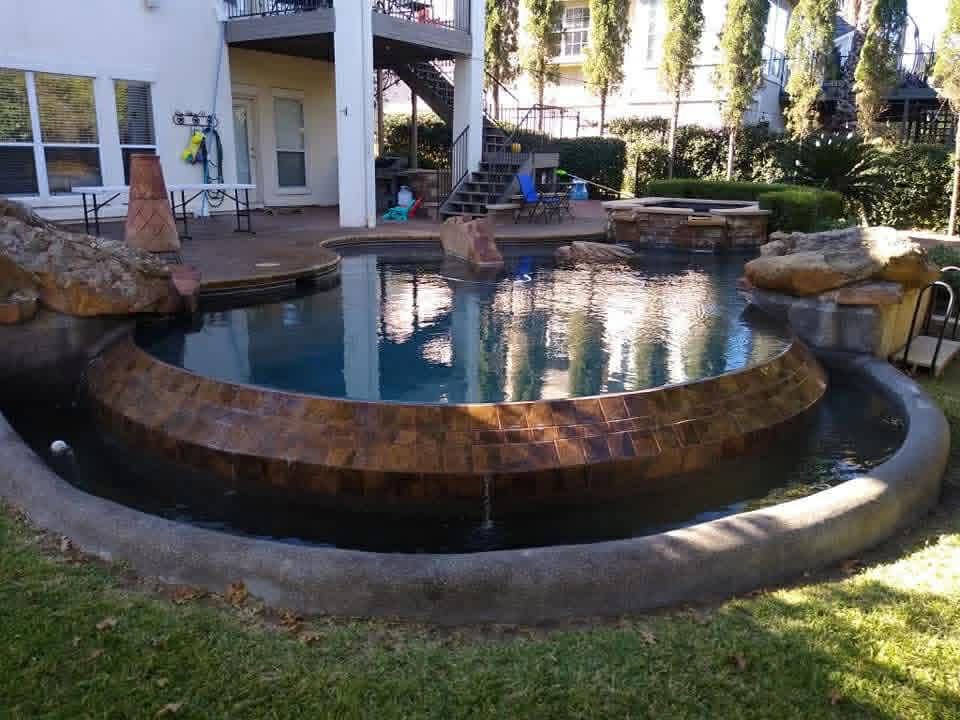
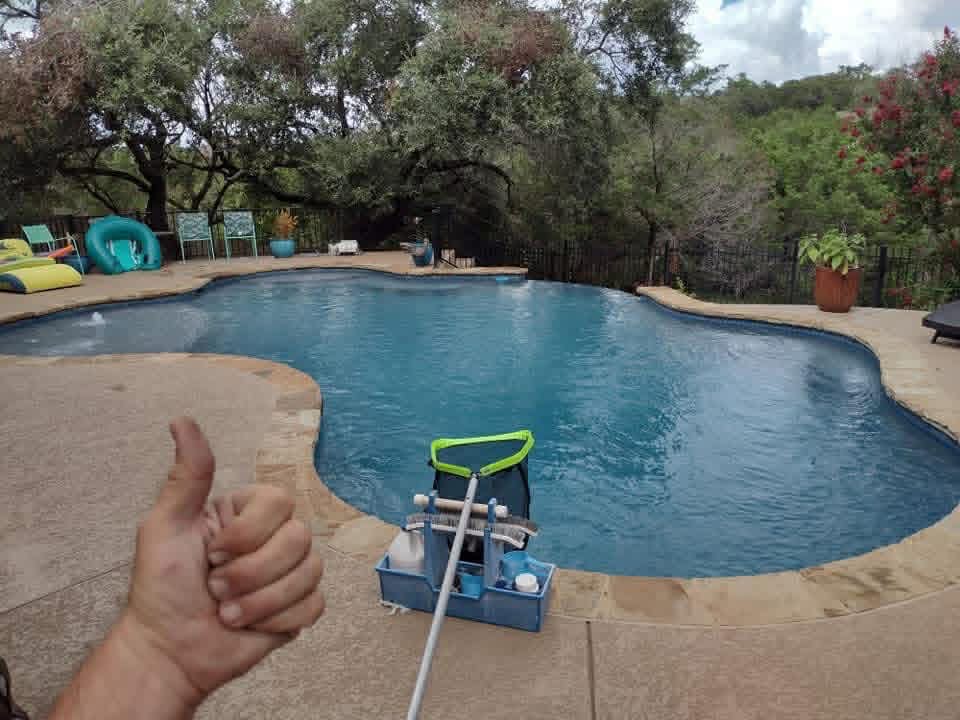
These are pools on our weekly routes, photographed on service day — a Mediterranean-style pool above Lake Travis, a Lakeway infinity edge over the marina, and a stone-walled pool with in-water loungers. Every one is kept clear by the same people, week after week.
The reasons
our customers stay.
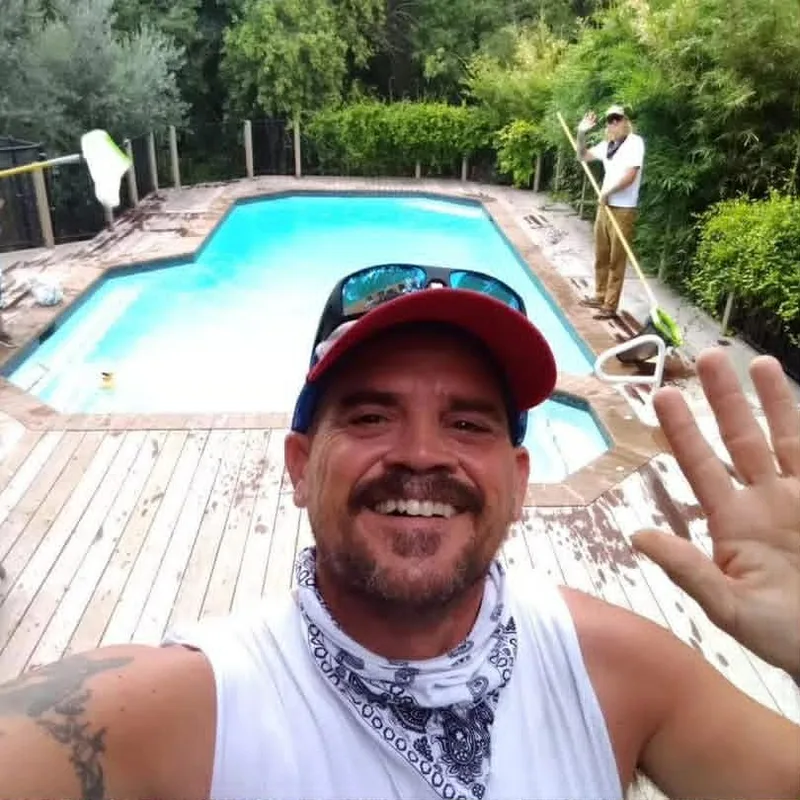
When you call us, you get us. Not a call center. Not a subcontractor. The same people who’ve been keeping West Austin pools crystal clear for over two decades.Keith Mallette · Owner & CPO
What you
actually get.
The eight questions worth putting to any Austin pool service before you sign — and exactly how an owner-operated, CPO-certified weekly service answers each one. Ask the same of whoever else you’re considering.
| What to ask | The Pool PoliceOwner-operated · CPO | Why it mattersAsk every provider |
|---|---|---|
| Is a contract required? | No — month-to-month | A contract protects the company’s revenue, not your water. Ask what the cancellation terms are and whether there is an early-termination fee. |
| Are chemicals included? | All chemicals, every visit | Austin’s heat and limestone chemistry mean heavy chlorine and acid use in summer. Ask whether the quoted monthly price is the total price. |
| Who actually services the pool? | Same tech, every week | Diagnosing a pool is pattern recognition. Someone who saw the water last week catches chemistry drift in its first week, not its third. |
| Who is accountable? | The owner — Keith Mallette, on routes | Ask who answers when something goes wrong, and whether that person has ever seen your pool in person. |
| Any certification? | Yes — CPO through Pool & Hot Tub Alliance | Texas does not license residential pool service, so any credential is voluntary. Ask for it by name and check it covers water chemistry. |
| How long in this market? | 26+ years — since 2000 | Central Texas water does not behave like pool water elsewhere. Ask about time served in this market, not the industry generally. |
| What triggers an extra charge? | Nothing — flat monthly rate | Get the exceptions in writing: trip fees, filter cleans, holiday weeks, storm cleanups, and green-pool recovery are the usual ones. |
| How do you handle hard water? | Limestone & well-water tuning | Local pools run 400–650 ppm calcium hardness. Ask what they change because of it — a provider without a specific answer is running a template. |
How to choose a pool service
in Austin.
Seven criteria that separate a service worth keeping from one you’ll cancel within a year.
- 01Years in business in Austin specificallyCentral Texas water and pollen are unforgiving — out-of-state experience doesn’t transfer cleanly.
- 02CPO certification through the Pool & Hot Tub AllianceTexas doesn’t license residential pool service, so the credential is voluntary — ask for it by name.
- 03Google rating from 47 Google reviewsFive reviews can be friends and family. Thirty-plus is a real customer base talking.
- 04Same technician every week, not rotating crewsPool problems are pattern-recognition. A new face every Tuesday means starting from zero each week.
- 05All chemicals included in the monthly rateIf chlorine and acid are billed separately, your invoice doubles in summer.
- 06No long-term contractA service confident in its work earns your business weekly. Contracts protect the company, not you.
- 07Owner is reachable, not behind a call centerWhen something goes wrong, you want the person responsible answering, not a ticket queue.
What Hill Country pools
need that others don’t.
Eight conditions specific to the Austin Hill Country, and what each one changes about a weekly route. Worth raising with any service you’re evaluating.
- Edwards Plateau limestone calciumWell water in Lakeway, Hudson Bend, and Rough Hollow runs 400–650 ppm. Sequestrant chemistry, not generic.
- Cedar fever pollen season (Dec–Feb)Yellow-green organic phosphate that feeds algae. Increased skimming + phosphate control through the season.
- Live oak catkin and acorn dropSpring catkins and fall acorns clog skimmers and stain plaster. Filter monitoring through April & October.
- Texas summer UV burning chlorineUV index 9–11+ from June through August. CYA-calibrated stabilizer protocol, not winter-default chlorine.
- Austin Water alkalinity driftMunicipal supply pushes pH high constantly. Muriatic acid additions matched to actual delivery, not a template.
- Aging plaster on Westlake/Rollingwood pools1970s–90s surfaces need careful pH and calcium tuning to avoid etching. We check plaster condition on the first visit and set the chemistry to it.
- Salt cell scaling (the hard-water tax)Calcium buildup kills salt cells in 18 months instead of 5. Acid-wash schedule baked into the route.
- Rough Hollow vanishing-edge complexityCatch basins, auto-fills, and multi-zone automation need pH-aware brushing on PebbleTec and glass tile.

Family-owned since 2000. Still.
Keith Mallette started The Pool Police in 2000 and still personally oversees every route today. Certified Pool Operator, 25+ years on Central Texas pools, one phone number that rings his actual phone. No franchise, no call center, no gig-worker app — just the guy whose shirt is in the photo.
Pool Owner Q&A
Everything Austin pool owners need to know — from cedar pollen season to equipment lifespan. 25+ years of Central Texas pool knowledge, answered.
About The Pool Police
How do you choose the best pool cleaning company in Austin, TX?
There is no single "best" — it depends on your pool's surface, your water source, and how much of the work you want to keep. Check seven things with any Austin provider: years served in Central Texas specifically, CPO certification and through which body, rating on a platform they don't control, whether a term contract is required, whether chemicals are included in the quoted price, whether the same technician comes each week, and what they change for 400–650 ppm calcium hardness. For reference, The Pool Police has been family-owned since 2000 under CPO-certified owner Keith Mallette, holds a 4.9-star Google rating from 47 Google reviews, and works month-to-month with all chemicals included. Full guide: /best-pool-cleaning-austin.
What makes The Pool Police different from other Austin pool companies?
Three things: (1) 25+ years of Hill Country experience specific to Austin's challenges — high-calcium limestone water, cedar pollen season, and Texas-summer chemistry demands; (2) CPO (Certified Pool Operator) certification, which Texas does not require for residential work and is therefore worth asking any provider about by name; (3) an owner-operated model where Keith Mallette personally oversees every account instead of dispatching rotating technicians. No contracts, flat monthly rate, chemicals included.
Austin Pool Ownership
Why does my pool turn green so fast in Austin during the summer?
Austin pools turn green in 24 to 48 hours because 95°F water and intense UV burn off chlorine faster than it can kill algae, especially after a summer storm.
Austin's combination of intense UV heat (which burns off chlorine rapidly), high phosphate levels from cedar and oak pollen, and hard alkaline water creates perfect conditions for algae blooms. A pool that looks fine on Monday can have visible algae by Friday if the chemistry is off. This is why weekly professional service is critical in Central Texas — we catch chemical imbalances before they become green-pool emergencies.
What makes cedar pollen season affect Austin swimming pools?
Ashe juniper pollen from December to February coats Austin pools in fine yellow dust that consumes chlorine as it decomposes and blinds filters within days.
Cedar fever season runs December through March in Austin. The yellow pollen that blankets everything — your car, patio, pool — is loaded with organic phosphates. When it lands in your water and breaks down, it feeds algae directly. During cedar season, we increase skimmer basket checks, run extra filtration cycles, and monitor phosphate levels closely. Many Austin pool owners see their worst water quality during January-February, not summer.
How do I deal with limestone calcium buildup in Central Texas pool water?
Confirm pool and fill-water tests and the actual supplier before evaluating suspected mineral deposits or choosing a treatment.
Confirm the actual pool and fill-water readings before considering a correction. Water balance depends on multiple measurements and the pool finish. Do not drain or alter treatment from a neighborhood assumption: ask a qualified professional to assess the need, structural considerations and discharge requirements. Our Austin Pool Chemistry Almanac provides planning prompts, not measured neighborhood chemistry.
Why is Austin's water so hard and what does it do to my pool?
Austin Water draws from Lake Austin and Lake Travis; other properties may have different utilities or wells. Check the supplier for the actual address and test pool and fill water rather than assuming a neighborhood hardness value. Ask for a water-balance assessment before choosing a treatment for suspected scale.
How much water does my pool lose to evaporation in Austin summers?
In peak Austin summer heat (June-September), a typical residential pool loses 1-2 inches per week — that's 400-800 gallons. During extreme heat with wind, it can reach 3 inches. This is normal and not a leak. However, if you're losing more than 2 inches per week consistently, you may have a leak and should have it professionally checked. A pool cover can reduce evaporation by 50-70%.
Do I need to worry about Austin water restrictions for my pool?
Pools are generally exempt from most Austin landscape watering restrictions, even during Stage 2 restrictions. You can top off your pool to maintain proper water levels. However, you cannot drain and refill without permission during higher restriction stages. We recommend a pool cover to minimize water loss and keeping your autofill system properly calibrated so it doesn't mask a potential leak.
Pricing
How much does full-service weekly pool cleaning cost in Lakeway and Steiner Ranch, TX?
Weekly full-service pool care in Lakeway and Steiner Ranch is billed at a flat monthly rate with all chemicals included, quoted from pool volume, spa and water source.
Price is driven by gallons, whether there is an attached spa or water feature, whether the pool is on city water or a well, and how much tree canopy sits over it — a Steiner Ranch pool under oak canopy carries more labour than an open Lakeway pool of the same size. Published bands for every service are listed in full on our Austin pool service cost page. There is no contract and no setup fee.
Service & Pricing
What's included in your weekly pool cleaning service?
Every weekly visit includes: surface skimming and debris removal, brushing walls and steps, vacuuming the pool floor, emptying skimmer and pump baskets, testing and balancing water chemistry (chlorine, pH, alkalinity, CYA), inspecting pump, filter, and all equipment, checking water level, and a visual inspection of the pool surface and tile. All chemicals are included in our flat monthly rate — you never pay extra for chlorine, acid, or other treatments.
Do you require contracts?
No. The Pool Police has never required contracts in 25+ years of business. We earn your business every single week with consistent, professional service. You can cancel anytime with no fees or penalties. We believe if we're doing our job right, you won't want to cancel.
What areas do you serve?
We serve Steiner Ranch, Lakeway, Cedar Park, West Austin, Bee Cave, Lost Creek, River Place, Four Points, and The Hills. Our service area is focused on the west side of Austin and surrounding communities. This focused coverage means we know the local water conditions, common equipment in your neighborhood, and can respond quickly when you need us.
Chemistry & Maintenance
How often should I run my pool pump in Texas?
In Austin's climate: 8-10 hours per day minimum in spring and fall, and 10-12 hours per day in summer (June-September). The goal is at least one full water turnover per day — most residential pools need 8-10 hours to achieve this. Running your pump too little is the number one cause of algae in Texas pools. Variable speed pumps can run longer at lower speeds, saving 60-80% on electricity while providing better circulation.
What should my pool chemistry levels be?
For Austin pools: Free Chlorine 2-4 ppm (higher in summer), pH 7.4-7.6 (Austin water drifts high — you'll use muriatic acid regularly), Total Alkalinity 80-120 ppm, Cyanuric Acid (CYA/stabilizer) 30-50 ppm (essential in Texas sun to protect chlorine), and Calcium Hardness 200-400 ppm (our tap water is naturally high). These ranges are critical — even small deviations in Austin's heat can lead to rapid algae growth or equipment damage.
What's the difference between salt water and chlorine pools?
Salt pools still use chlorine — a salt chlorine generator converts dissolved salt into chlorine through electrolysis. The water feels softer and doesn't have that strong "pool smell." However, in Austin, salt pools require extra attention: our hard water causes calcium scale on salt cells (requiring cleaning every 3-6 months), the generation process naturally raises pH (needing more frequent acid additions), and salt can damage unsealed limestone and travertine decking common in Steiner Ranch and Lakeway homes. We service both types.
How do I know if my pool has a leak?
The bucket test: place a bucket of pool water on the steps, mark water levels inside and outside the bucket, wait 24 hours with the pump running, then compare. If the pool dropped more than the bucket, you likely have a leak. Common leak locations include the light niche, skimmer-to-pool connection, return fittings, and underground plumbing. The Pool Police offers professional leak detection service to pinpoint the exact location without unnecessary digging.
Equipment
How long does pool equipment last?
Typical equipment lifespan in Austin: Pool pump 8-12 years (variable speed pumps last longer), filter cartridge 1-3 years, sand filter media 5-7 years, DE filter grids 5-8 years, gas heater 5-10 years, heat pump 10-15 years, salt chlorine cell 3-5 years, automation system 10-15 years. Texas heat and our hard water can shorten these lifespans. Regular maintenance extends equipment life significantly — a well-maintained pump can last 12+ years.
Should I get a variable speed pump?
Yes, if your current pump needs replacement. Variable speed pumps use 60-80% less electricity than single-speed pumps — in Austin, that's $50-100+ per month in savings. They also run quieter (important for Steiner Ranch and Lakeway homes where equipment is close to outdoor living areas), provide better filtration at lower speeds, and are now required by Department of Energy regulations for new installations. Most Austin pool owners see a full payback within 1-2 years.
What does it mean when my filter pressure is high?
Filter pressure 8-10 PSI above your clean starting pressure means it's time to clean or backwash your filter. Note your filter's clean pressure (usually 10-15 PSI) and monitor it weekly. High pressure means the filter is clogged with debris and can't flow water properly, which makes your pump work harder, wastes energy, and reduces circulation — leading to algae in Austin's heat. Never ignore rising pressure.
New Pool Owners
I just bought a house with a pool in Steiner Ranch. What do I do first?
Start by collecting equipment model information, available manuals, recent service records and the previous treatment history. Arrange water testing and an equipment assessment, and confirm the scope and price before booking. Do not choose a pump runtime or chemical treatment solely from a new-owner checklist.
How should I prepare my pool for Austin's brutal summers?
Review your testing supplies, equipment instructions and who checks water between visits before swimming activity increases. CDC recommends disinfectant and pH checks at least twice daily, more often during heavy use. Choose any equipment changes or treatment from actual conditions, not a universal summer runtime or dose.
Quick Reference
| Equipment | Typical Lifespan | Austin Notes |
|---|---|---|
| Pool Pump | 8–12 years | Variable speed lasts longer, saves 60–80% on electricity |
| Salt Chlorine Cell | 3–5 years | Austin hard water causes calcium buildup — clean every 3–6 months |
| Filter Cartridge | 1–3 years | Cedar pollen season shortens life — inspect quarterly |
| Gas Heater | 5–10 years | Less used in Austin's mild winters |
| Heat Pump | 10–15 years | More efficient than gas in Central Texas climate |
| Automation System | 10–15 years | Pentair & Jandy most common in Lakeway/Steiner Ranch |
Still Have Questions?
We're happy to talk pools. No sales pitch — just honest answers from 25+ years of experience.
Service in real time.
A weekly visit is the same every time: skim, brush, vacuum, empty the baskets, test and balance the water, and check the equipment before we leave. The pools below — lakefront, copper-tile waterfall, skimmer net still on the deck — were photographed at the end of that visit.
From the Field
The work, documented
Our case-study library is built for real diagnoses, original job photos, and outcomes we can verify—not anonymous marketing claims.
Explore customer case studies →Evidence standard
Stories will appear only after the details and photo record are verified.
No stock transformations. No invented customers. No outcome published without permission.
From the Blog
Recent articles
Practical guides on pool chemistry, equipment, leaks and seasonal care, written for pool owners in Lakeway, Steiner Ranch, Cedar Park, Bee Cave and West Austin — the same questions we answer on the route every week.
Ready to Call In
the Pool Police?
Give us a call for a free estimate. No contracts, no pressure — just clean pools.